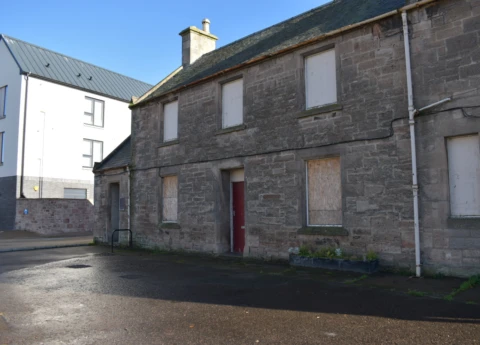

The report, Tax and the Reuse of Scotland's Long-Term Derelict Land, published today by the Scottish Land Commission, examines how Scotland's tax and fiscal system could better support the reuse of 466 long-term derelict urban sites. It finds that while tax alone is not the deciding factor in whether sites are redeveloped, there is a real opportunity to use it more strategically.
Developers currently face a combination of rising construction costs, expensive finance, planning delays and remediation costs that make many projects financially unviable. The research suggests that rather than introducing broad tax incentives across Scotland, a more targeted, place-based approach could focus support where it would have the greatest impact — on clusters of long-term derelict land where redevelopment could deliver the most benefit for communities.
The report also finds that recurring land and property taxes, such as Council Tax and business rates, may have greater potential to encourage redevelopment than events-based transaction taxes such as Land and Buildings Transaction Tax (LBTT), because they have a greater influence on the long-term costs of owning and developing land. It also highlights the importance of better land data to help identify suitable sites and target any future incentives effectively.
Kathie Pollard, Head of Policy at the Scottish Land Commission, said:
"Long-term derelict land represents a huge opportunity for Scotland. These sites often sit at the heart of communities where they could instead provide homes, employment, green space or support wider regeneration. This in turn creates wider economic activity.
"This research shows there isn't a single tax measure that will bring these sites back into use. Redevelopment decisions are influenced by a range of financial and practical challenges, and tax is only one part of that picture.
"However, it also shows there may be opportunities to use tax more strategically. Targeted support and a place-based approach could help improve the viability of sites where redevelopment would deliver the greatest benefit for communities. Our research has highlighted the limits of our current tax system to support regeneration.
"As Scotland continues to consider how tax can support wider public policy objectives, bringing long-term derelict land back into productive use should be part of that conversation."
The report builds on the Scottish Land Commission's wider programme of work examining how tax and fiscal policy can support land reform, regeneration and the sustainable use of land.
Read the report