
New advice published today by the Scottish Land Commission explores how tax and fiscal policy could play a stronger role in helping Scotland cut greenhouse gas emissions from land while supporting land reform objectives.
The report, Tax Options for Reducing Emissions from Land and Supporting Land Reform, was produced as advice to Scottish Ministers following a commitment in the Scottish Government’s 2025–26 budget and tax strategy to explore whether fiscal measures could play a stronger role in land reform and climate policy, including options for a carbon land tax
The Commission’s work examines whether taxation could help encourage land management that reduces emissions, supports peatland restoration and contributes to Scotland’s wider climate goals.
“Land will play a crucial role in meeting Scotland’s climate and nature goals, and tax has the potential to be a powerful tool in shaping how land is used.”
Land plays a significant role in Scotland’s climate and economic landscape. More than half of the UK’s wealth is tied up in land and property, yet it accounts for a small amount of the tax base. The Commission advises that strengthening the connection between land and taxation could provide government with additional tools to support public policy objectives, including climate action and land reform.
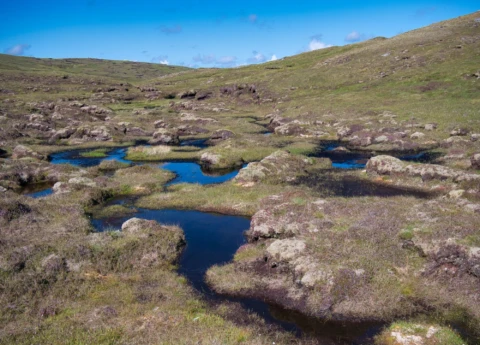
Peatland was examined as an initial focus because it is currently the largest source of emissions within Scotland’s land use sector. At the same time, healthy peatland can act as a major carbon store, making restoration an important part of Scotland’s climate response.
The report finds that while in the longer-term tax could potentially influence land use behaviours, introducing a carbon land tax focused specifically on peatland emissions would present significant practical challenges at present. These include limitations in how emissions from peatland can be measured at individual landholding level, gaps in data on ownership and land condition, and the need to understand how such a tax might affect different types of landowners.
Kathie Pollard, Head of Policy at the Scottish Land Commission, said:
“Land will play a crucial role in meeting Scotland’s climate and nature goals, and tax has the potential to be a powerful tool in shaping how land is used.
“Our work shows that while the concept of a carbon land tax raises important questions and opportunities, there are significant practical challenges that would need to be addressed before such a tax could be introduced fairly and effectively.
“Rather than introducing a new tax in isolation, government should consider how regulation, incentives, markets and potentially future fiscal measures can work together to support nature, climate and wider land use change.”
While private finance is supporting woodland creation, the report finds there is currently little evidence that private finance markets can deliver peatland restoration at the scale and pace required. The Commission advises that the Scottish Government should review the balance between regulation, incentives and market mechanisms used to drive peatland restoration.
“Our work shows that while the concept of a carbon land tax raises important questions and opportunities, there are significant practical challenges that would need to be addressed before such a tax could be introduced fairly and effectively.”
In particular the report says that signalling a future point at which degraded peatland would carry a financial liability for the landowner, through tax or regulation, could help create a balanced approach and help prevent incentives further adding to land prices.
The report also concludes that Scotland needs stronger land data and valuation systems if tax is to play a more strategic role in environmental and land policy. At present, incomplete information on land ownership, use and value limits the government’s ability to design effective land-based taxes. The Commission recommends developing a modern tax infrastructure that brings together land ownership, valuation and land use information to support future policy options.
Kathie Pollard added:
“If Scotland wants tax to play a bigger role in delivering environmental outcomes from land, we need better data, clearer land information and a modernised system for understanding land values and use.
“This report highlights the work that would be needed to create those foundations so that future governments can use tax effectively alongside other policy tools.”
The Scottish Land Commission will now develop a proposed programme of work setting out how Scotland could build the data, valuation systems and institutional capacity needed to support future reforms to land taxation.