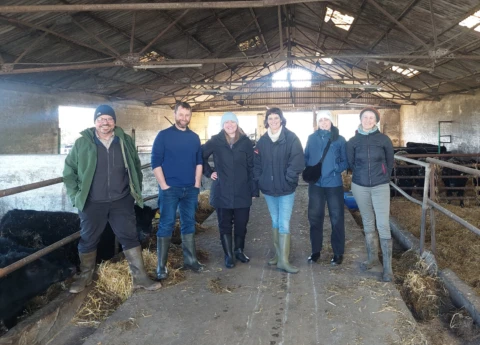

How many of the problems we face today could be solved by open and active listening to different perspectives? Over the last few months I’ve spent a lot of time working closely with land agents and other professionals, as part of the Commission’s programme of engagement with the sector. At the same time, the Good Practice Team and the wider Commission are engaging NGOs, public and private landowners, investors, project developers and diverse community representatives about approaches to land decisions. As a public body we have a responsibility to listen to, and reflect on, the wide-ranging views of stakeholders with radically different interests, contexts, constraints and motivations.
I’ve been struck by the clarity of one message that is coming through this work - the importance of building trust and challenging inflammatory language. There is a clear frustration with the barriers and trigger points that we all know can scupper constructive conversation about land and how our society relates to it.
Overcoming polarisation
In recent years, discussions about land - like many areas of public debate - have become polarised, whether through social media, wider communications, or assumptions we make about those in different contexts. This can make constructive conversation more difficult and reinforce barriers between perspectives. People on both ‘sides’ of the land debate feel judged by the ‘other’. It’s true that we can all be guilty of making reductive assumptions about others’ positions. What I’m hearing from land professionals who attend our events is a general sense that we would all benefit from a greater understanding of each other’s perspectives. So that instead of letting labels and accusations get in the way of discussion, we start to explore our common ground and see where gains can be made.
“Land is such a cross-cutting issue. It is core to our sense of belonging, our housing, food production, amenity and wellbeing – not to mention the urgency of ecological sustainability and mitigation of the impacts of climate change.”
Trust creates space for truths to be aired
Let’s be frank – discussion in these events can become a little spicy – albeit always interesting and ultimately constructive. Sure enough, assumptions and even accusations can fly about political or ideological motivations for land reform. It’s healthy – and I believe necessary - to air those frustrations, because then we can all get down to the important work of building space for conversation rooted in a foundation of respect, openness and active listening. Where that happens, we are more likely to see better-informed decisions, fewer entrenched disputes, and outcomes that reflect a wider range of needs and interests.
Land is such a cross-cutting issue. It is core to our sense of belonging, our housing, food production, amenity and wellbeing – not to mention the urgency of ecological sustainability and mitigation of the impacts of climate change. When discussing land there is often a prevailing view that we could benefit from more joined-up thinking - from the local level right through to nationwide policy and strategy. It can often appear that different sectors sit in their siloes and never overlap. How then do we address potential conflict and compromise – or seize opportunity when it presents itself? How often do foresters sit down with farmers, landowners with tenants, or land managers with the communities who may be affected by their decisions? It happens, but surely not as often as it could.

Meeting each other where we are
If we understood each other better, perhaps we would not reach for reductive or inflammatory language when talking about those who voice a different perspective. Many land professionals are telling me that they would like to get the ‘others’ in the room. Whether the ‘others’ are community representatives, agricultural tenants, landowning public bodies or government officials, there is a need for all these different realities to overlap so that progress can be made on the issues that vex us. Doing this requires some humility, optimism and openness from all involved.
Momentum is building for more work of this kind, as the problem of polarisation affects decision-making across many contexts and public conversations. Here in Scotland, projects such as the Common Ground Forum demonstrate ways to change the tone and open up dialogue. The CGF has used stakeholder mediation to build trust and relationships, bringing together a cross-section of 150 individuals and 50 organisations for challenging conversations shaping the future of sustainable upland deer management. Much can be learned from this - not least that building relationships takes commitment, time and investment. When we do that, the rewards can be transformative.
The feedback from land professionals presents an interesting challenge. What tools might we employ to shape events and experiences that help a wide range of stakeholders to understand each other better so that progress may be made on some of the most intractable challenges of our time? There is no doubt that building trust is foundational. Only on that basis can we voice challenging truths to each other – and genuinely hear them. When we can act on the basis of what we agree on, rather than what we are afraid of, we will be able to seize our chance to make things better.
Despite our differences, we would be hard pressed to find anyone who disagrees that we should strive for happy, resilient, thriving communities in sustainably managed places. If we find ways to respect, understand and communicate constructively with everyone with an interest in land, we might just find that doors start opening to new ways forward.